Russia and Iran are about to turn the Gulf of Oman into a high-stakes theater of military defiance.
On February 19, the two nations will begin joint naval maneuvers in the Sea of Oman and the northern Indian Ocean. This isn’t just a routine drill. It is a calculated middle finger to Western maritime dominance during one of the most volatile periods in recent geopolitical history. Coming on the heels of the 2025 Israel-Iran conflict and a massive U.S. naval deployment, these exercises represent a massive shift in the balance of power in the Middle East.
What are the Russia-Iran naval exercises? The joint military drills are a collaborative effort to enhance maritime security and strengthen bilateral naval ties between Tehran and Moscow. These exercises involve strategic maneuvers in the Gulf of Oman and northern Indian Ocean, often serving as a counter-signal to U.S. and NATO presence in global shipping lanes.
Why is the Russia-Iran Military Alliance Rapidly Escalating?
The timing of this exercise is everything. Tehran and Washington only recently wrapped up a second round of high-pressure talks in Geneva. While Iranian officials have voiced optimism about these Omani-mediated negotiations, they aren’t taking any chances. They are hedging their bets with Russian firepower.
Earlier this February, the Islamic Revolutionary Guard Corps (IRGC) flexed its muscles in the Strait of Hormuz. Now, by bringing the Russian Navy into the mix, Iran is signaling that it has powerful friends who aren’t afraid of a U.S. fleet presence.
Here’s the thing. The dialogue between the U.S. and Iran was left in tatters following the June 2025 Israeli airstrikes. That event triggered a 12-day kinetic conflict that briefly pulled the United States into the fray. Now, Donald Trump has deployed what many describe as a “formidable” fleet to the region. Iran’s response? A Russian partnership.
Will the Strait of Hormuz Be Blockaded?
Every time the U.S. increases pressure, Iran mentions the “chokehold.”
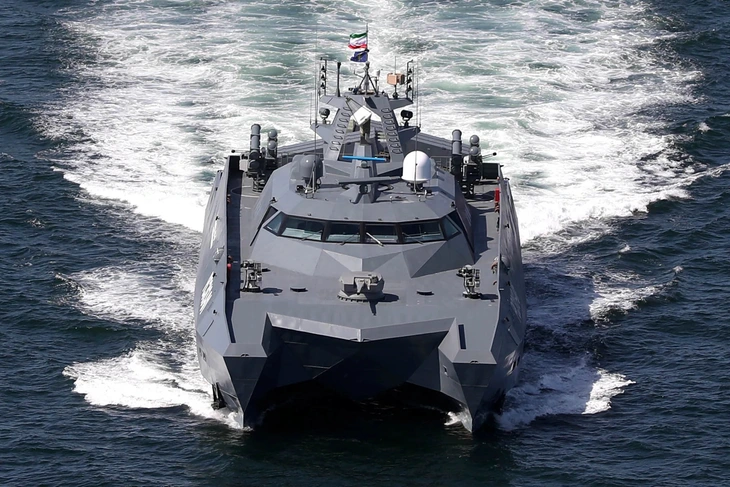
The Strait of Hormuz is the world’s most sensitive energy artery. It carries a massive chunk of the planet’s oil and liquefied natural gas (LNG). While Iran has never fully closed the waterway, they just proved they can. On February 17, they temporarily shut down parts of the Strait for “security reasons” during their own independent drills.
Rear Admiral Hassan Maghsoudloo, the exercise spokesperson, emphasized that the goal is “maritime security.” But for the West, “security” looks a lot like “control.”
What does this mean for you? If a blockade—even a temporary one—occurs, global energy prices will skyrocket instantly. The presence of Russian ships alongside the IRGC suggests that any U.S. attempt to reopen the Strait by force would now risk a direct confrontation with a nuclear-armed Moscow.
The Geopolitical Bottom Line: A New Triad
Iran isn’t just looking to Russia. They are actively courting a triad that includes China. This three-way cooperation is designed specifically to neutralize U.S. sanctions and military posturing.
Think about it. By conducting these drills in the northern Indian Ocean, Russia and Iran are projecting power far beyond their own coastlines. They are claiming a seat at the table of maritime superpowers.
Expert Angle: This is classic grey-zone warfare. By holding “security drills,” Iran and Russia can legally occupy strategic waters, making U.S. naval movements more difficult without firing a single shot. It’s a game of chicken played with destroyers.
The region is a powder keg. While diplomats talk in Geneva, the sailors in the Gulf of Oman are preparing for a different reality. Tension is the new normal.
Bottom Line: The Russia-Iran joint naval exercise is a strategic push to challenge U.S. dominance in the world’s most critical oil corridor. As Tehran maneuvers between Geneva talks and military drills, the risk of a miscalculation in the Strait of Hormuz has never been higher.
Share this content: